
Practising the art of paying attention
Words & images © Paul Ransom
We like to tell ourselves that we know; but we are more than likely still guessing. Improvising and approximating. Hoping. We have never truly worked out how best to live, with ourselves or with others, nor how to approach death. We are still trying, and conspicuously failing, to locate our place in the greater scheme of things and to unravel the seemingly paradoxical mysteries of sentience and existence. Indeed, we are better at starting wars and shitting in our own nest than we are at living happily, healthily, and harmoniously. Our condition is, as many have observed, absurd and ultimately groundless.
The typical response? Invent multiple forms of meaning (and other essentialising fictions) to paper over the cracks, create mechanisms of plausible denial, and feed endless fantasies of control. Arrogant, stupid? Sure; except we may not have much choice.
Like it or not, we are here now. Although we could down tools and kill ourselves in the next minute – thus curtailing the inexorable and accelerating process of rot – the odds are that the vast majority of us will not only survive the next hour but carry on to plot the arc of our decay in considerably more detail. As gruesome and ultimately futile as that sounds, it comes bundled with a suitably immersive distraction: the what/how/why of having time to fill. Kill.
If we are being honest – and not flattering ourselves with gods, higher purposes, and other cosmic confections – it is clear that our lives are what we do with the time before we die. In this shrinking window, our lives happen. They are a process. A transition from an extremely rare state to a far more likely one.
Thus, once we correct for the reflex of self-importance, we are left with a clear job spec. Fill remaining time as pleasantly (meaningfully, etc) as possible and avoid undue suffering.
To this end we have concocted a panoply of religions and other philosophies. In addition, we have created an infinite scroll of distraction to inject short term reward and otherwise mask the pain.
Should anyone think I am being snooty and superior here, I plead guilty to all aforementioned faux pas. I have, like so many others, been attracted to grand overarching explanations in an attempt to better comprehend world and self and, tellingly, help me feel less empty and unmotivated as I stumble downhill towards oblivion.
However, over the last decade I have yielded the desire for the universal and profound in favour of more practical, more immediate action. It is in this spirit – rather than that of truth seeking or wisdom gaining – that I am now sharing my self-authored spin on the classic Buddhist Eightfold Path.
*
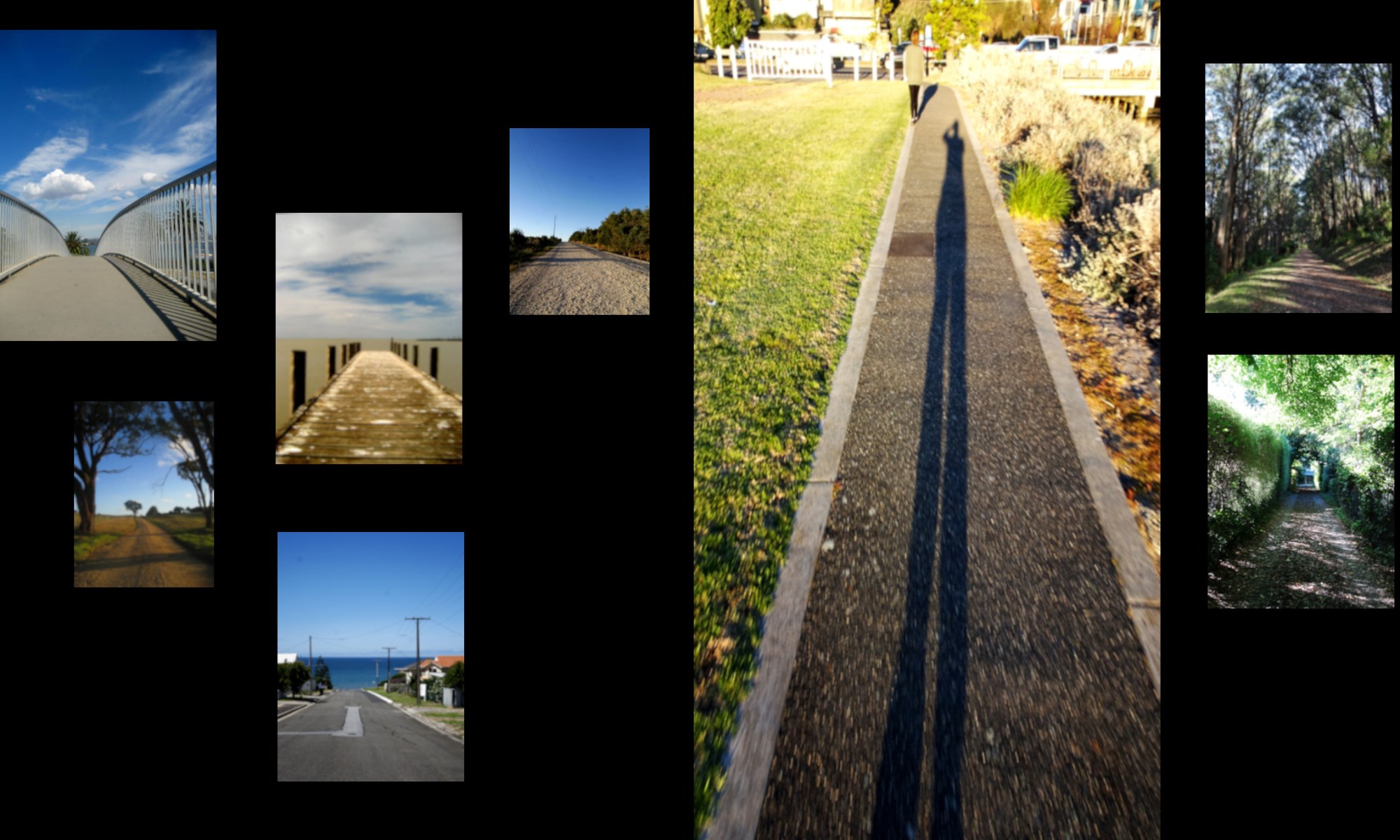
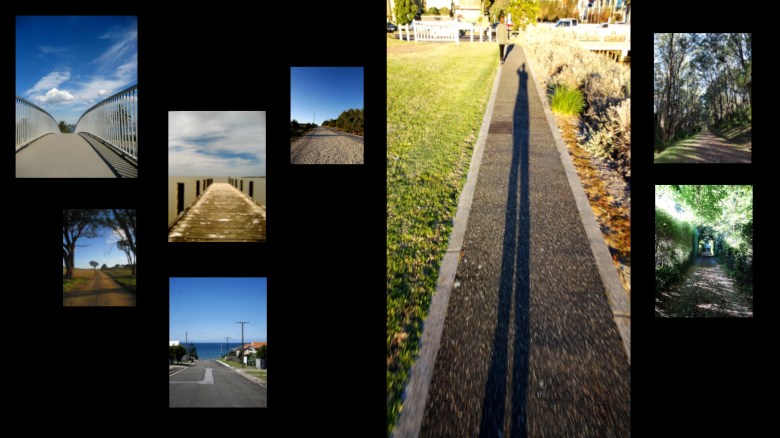
Why bother with a path? Good question. After all, the route won’t change the destination. But when all you have is a road it makes sense to address the way you travel. For me, that means attention. Where to focus it, with what intensity, and for what end?
- Although it sounds a little simple to say what I attend to is what I am, to an extent it is true. If my life is an event, then subjective experience, (including that of self), is a similarly branching process – meaning that ‘I’ am not a fixed point but an iterative flow of awareness. Therefore, wherever my attention lands is not just where but what I am in each moment. This is broadly in line with the Buddhist concept of anatta; namely, that there is no essential self.
In truth, path is likely the wrong metaphor. Map reference is more accurate. My reinvented, personalised eightfold way is more a collection of reminders than a tablet of commandments, and more concerned with balance and attitude than enlightenment. It is also rooted in this life and how best to spend the time I have left, as opposed to focusing on the accrual of brownie points for an alleged après-vie.
To this end, the octet I have chosen are all practises – things I can do. Moreover, they are tangible, repeatable actions that confer a mix of short, medium and longer term benefit at a relatively tiny ongoing cost. None of them require me to be pure or possess genius. None ask me to be subservient to or afraid of a higher power. None offer bribes or threaten punishment. They will not make me better than you, nor will they save me. At best, they might prolong my life and enhance my capacity to appreciate and enjoy it more fully. At worst, they might pressure me into saying no to that extra piece of chocolate or tempt me into the arms of a slightly longer siesta.
Better still, none of them require me to be right. Indeed, the way I have framed them, none of them are requirements. My eightfold rejig is entirely voluntary.
You may think this an overly long preamble, but the point of this article is not so much to convince you that my particular eight are the way but rather that the processes and practises of thinking about and remembering them – of attending to them – is the catalytic element. What makes this thing tick is the doing of. Or, if you prefer, the habit of.
*
I was inspired to ponder what a path might look like by the lady behind the counter at the local bagel joint. One day, out of the blue, she asked if I was a Buddhist, if I practised meditation. I fumbled a vague reply but her question lodged.
Like so many in the West I do not consider myself religious. I do not believe in gods who make covenants with some at the expense of others or who fret about sandwich fillings and hair. I do not attend services, participate in standard rituals or offer up prayer. Rather, I cherry pick from various spiritual and philosophical traditions, including Buddhism, without attaching doggedly to any. So, in a sense the bagel shop lady’s intuition was right. I may not be Buddhist but I have adopted some of its focus and presently practise aspects of its discipline.
To repeat: focus, practise, discipline.
Whatever mystical pretensions I may have, I have come to understand that the real difference-maker is not metaphysical – not an idea or ideal – but repeatable action. (You might even say, things I do religiously.)
Thus, after some juggling, I settled on my hodgepodge version of the ancient Eightfold Path1. Although each element was already part of my routine, its codification has since proved useful, if only to keep the eight practises front of mind. Indeed, the underlying point of compiling the list was focus. Mindfulness.
For ease of memorisation and to render it as an easy chant, I have settled on the following:
Diet, Posture, Exercise, Rest
Self-talk, Focus, Gratitude, Breath
Please bear in mind that these are highly personal choices, and that I am not forwarding them as a means of salvation or as pillars of special wisdom. Again, the rationale is less about virtue and correctness than it is about developing and maintaining habits that help me live a ‘better’ life.
This is why five of my eight begin with the body. Anchoring to the flesh, with all its fragility and constant changing, will strike some as decidedly unspiritual, as excessively materialist. However, for me it is a lighthouse, an unmissable brightness in a fog of competing stimuli. It is, after all, hard to ignore. Its centrality and immediacy underscore the repeatability of my eightfold practise; which is crucial.
Doing something once or twice is like a New Year’s resolution. Useless virtue. Noise. Repeated practise is where the deeper benefits lie. Fortunately, we are equipped with brains that love repetition. This is why we so easily form habits. Yes, habits can become addictions and unquestioning orthodoxy, routines to which we desperately cling. They can leave us vulnerable, trapped in states of need and feeling powerless. Thus, the bedrock habit in my eightfold practise is conscious remembering.
From there, the other habits are triggered with little resistance, meaning that the practise is not a chore, not a grinding obligation, but a series of prompts to do relatively simple and pleasant things. All of which means they happen. Maybe not every day, but almost.
Here too, a point worth noting. This is not about perfection. It is not a test to be completed, passed or failed. Rather, it is practising, an ongoing rehearsal for a semi-improvised role play; at the end of which I die. And though I could easily not bother – for all the difference it will ultimately make – I choose to proceed. Because, to some degree, the practise is the pay-off.
The path is where the path leads.
I offer thanks to the bagel shop lady for her question. She prompted me to prompt myself. Remember these things, pay attention to them, notice when you are not doing them. If anything, since I took her cue and adopted an eightfold mantra, I have got better at noticing. The repeatable action part has followed on from that. Consciously and habitually.
The core take-out is perhaps that of self-awareness, (which is different from self-centrism). Note the ways your body, your mood, your inner dialogue shift. Identify the patterns. What happens when I do X? How do I feel afterwards? What triggers X, and what is that voice in my head really trying to say? Everything on my eightfold path is both the result of, and the subsequent practise of, self-awareness. Put simply, the art of paying attention.
Postscript: Unboxing the eight
Obviously, the items below represent one person’s idiosyncratic take; meaning that none may be suitable for you and, furthermore, that three or ten or 74 might be a more appropriate number. (What the practise is called is irrelevant.) However, beneath the specifics are deeper currents that, I believe, are common to us and can bring benefit to many.
1: Diet
For me, a great start point. What I put in my body – when, how much – not only impacts my short and long term health but triggers me to be observant. Indeed, diet is a great self-awareness primer, if only because it is daily and its effects are ever changing. The way our bodies react to food/drink/drugs gives us highly individualised data and serves to remind us that we are not fixed, not impervious. It is an invitation to honesty and a golden opportunity to practise self-care. And, of course, diet is about system maintenance, which is about capacity, which is about agency. Therefore, I pay attention to the way my body responds to consumption in order that I may stay free – as in, able to do stuff I like and not be addicted to any substance or ensnared by the medical industry. Simple really, but also profound.
2: Posture
Again, an awareness trigger, bringing me back to the body and the moment. I notice when I slouch, slump, move out of alignment, etcetera. Thereafter, I return to posture and instantly feel my energy increasing. Indeed, it is easier (less stressful on the body) to sit up straight and walk tall. Looks better too. More elegant. (NB: Good posture may induce others to assume you are a dancer and/or gay.)
3: Exercise
The body wants to move. We are built to locomote. These days, my body impels me to exercise. For the last 25+ years I have enjoyed the multiple pleasures of brisk daily walks. I also love to dance and to play the table tennis variation my friends and I invented. (Kinder to our old man physiques than the real thing.) For me, however, the key is not to make it compulsory, but to keep it fun. Gamify the walking, dance spontaneously, soak up the sweaty high of the match. When movement is joy – not a chore, a competition or an expensive gym membership – the barriers of resistance are much lower and the repeatability, which is where the real pay-off resides, comes easy.
4: Rest
Although we live in a culture that valorises 24/7 busyness, I have learnt to consciously practise rest. Not just sleep, but stopping, switching off, idling. Aside from all the well documented physical and mental health benefits of good rest, I have found it useful creatively, even spiritually. There is something ineffable and beautiful in quiet time, in stillness, in space.
5: Self-talk
This is a big one for me. I have an especially vitriolic inner critic voice that loves to jump on every slight misstep or fumble as proof of profound incompetence, moral cowardice and all-round unworthiness. However, beneath the barbs, the true pattern, (learnt behaviour), is a tendency to indulge in catastrophic thinking. Hence the exaggerated negativity. Once that penny dropped, I added this to the eight in order to deflate the drama and minimise the corrosive spill over. Even though its inclusion here has yielded quick, noticeable results, I would not go so far as to claim victory. Yet.
6: Focus
As my eyesight declines I am increasingly prone to clumsiness and collisions. This trend is being amplified by a long standing habit of letting my focus drift. Call it absent mindedness or ‘not being truly present’. Given this, I am employing focus topically, paying closer attention to what is directly in front of me. The upside is fewer accidents – bangs, trips, cuts – but there is also a mental and emotional dividend, because I am now effectively practising presence. There is a palpable decluttering aspect to this, but also a seam of calm. When I focus on the flow of pedestrians and other hazards on my daily walk I nudge the insistent drone of ego out of focus. In this way, presence is a kind of mini-break from the default. From unconscious habit. In short, focus = mindfulness.
7: Gratitude
This one is obvious. Its inclusion here is simply an extension of existing practise. When I remember to be thankful, I understand that I lack nothing. More importantly, during moments of suffering, I am reminded that even my pains and frustrations will pass. As will my manifold joys. At its deepest level, gratitude is the gateway to accepting mortality as a blessing. One day, all this noise will cease. Thank fuck for that. Net result: life more vivid, more beautiful. Win-win.
8: Breath
In my case, breath awareness is less to do with standard meditation technique and more about creating a cue to slow and deepen my breathing. From there, I can better focus on and follow the cycle. As you might imagine, this is calming. Grounding. In moments of stress and anxiety, it is de-escalating. On fast walks, it doubles as a tempo setter and endurance enhancer. Our breath is simple, so central and basic that we mostly overlook it. Yet, when we tune in, it can be transcendent. All of the above culminates in breath.
You quite likely have your own wellbeing rituals and mental mantras and, like me, sometimes struggle to maintain them. I will conclude by reminding us both that this is to be expected. None walk a straight, ascendent path to an idealised destination. Indeed, our stumbles and wrong turns are an intrinsic part of the process. To a degree, we are the result of our mistakes.
Good luck going forward. Or sideways, or round in circles; whatever works best for you.
1: The traditional Noble Eightfold Path is: Right View, Right Resolve, Right Speech, Right Conduct, Right Livelihood, Right Effort, Right Mindfulness & Right Samadhi (concentration). Clearly, there are deeper dives to be had here, and I do not profess expertise in Buddhist teaching and philosophy, let alone the translation of Sanskrit or Pali.
 As If You Were Listening