
Downstairs with Grandma’s ghost
Words © Paul Ransom / Image © Paul Ransom & unknown snapper
When they offered me the room I fell in love right away. Having recently lived in – and been evicted from – a tiny house in the forest, the thought of a cosy nook in an enormous house by the sea ticked multiple boxes. Aside from the pleasing (a)symmetries, and the shambling, stony grandeur of the place, there was the irresistible lure of personal history. Here was a room my grandmother would have recognised. The servant’s quarters.
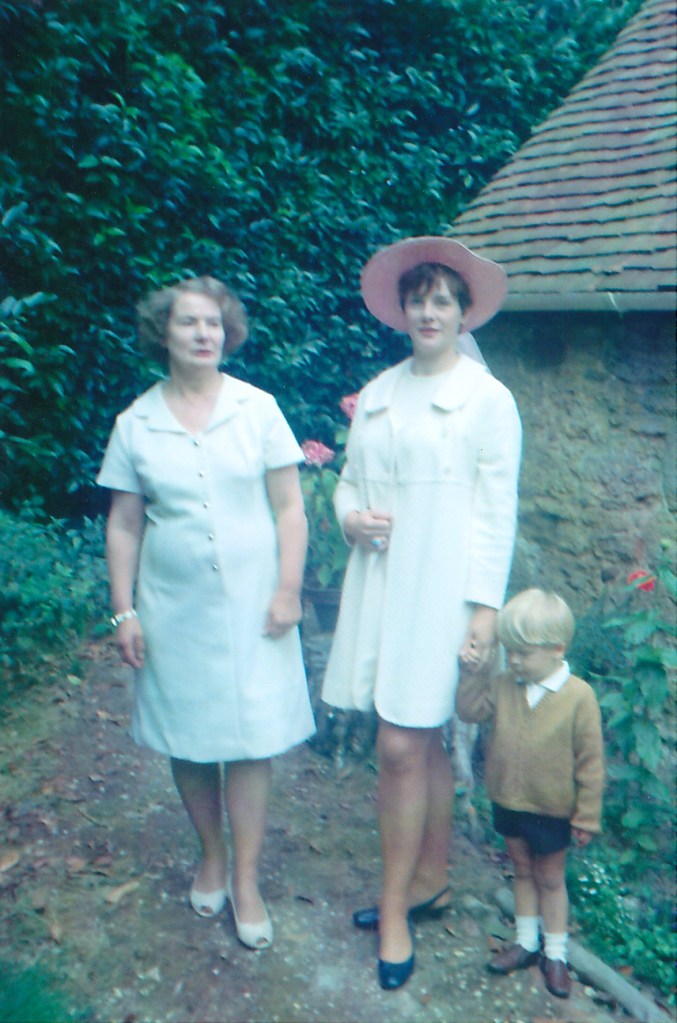
Unlike some, I do not claim to be descended from royalty or celebrity. My ancestors were not deemed worthy of annals and monuments. They were toilers, peasants, cannon fodder. And, on my mother’s side, domestic servants. Her mother, Dorothy, spent most of her working life in the employ of English gentry. Folk with land and fancy houses like the one I have just moved into.
If she was once a mystery to me, in this lovely room I feel a little closer to her. Not that these walls will reveal any of her secrets, nor my new house mates require me to doff my cap and polish their silver. Rather, I can picture her here. In a room without a view, adjacent to the main kitchen. A simple private space in a grand location.
- Interlude: Writing this, thinking of her…a wave of sadness, thick like the walls of this house, amorphous like mizzle on the South Downs. Somehow, I feel at once an irrecoverable distance and a sublime intimacy. As though I too were a servant, returning home on a chilly evening, residing with her at an ever-warm fireside, listening to the rain dancing on the panes. For a few minutes, a river of blood, trickling through the aridity of time and circumstance.
Yet what different worlds we move in. Dorothy, born working class and female in Edwardian England, lived a semi-nomadic life, shuffling from one tied cottage to another, and later, thrice between Sussex and South Australia, unable to choose between émigré daughter and ancestral country. With her few knick-knacks – like the blue & white tea set I now hoard as treasure – and her cargo of extraordinary secrets, she lived a comparatively light and transient life. So little owned, so much left behind. Like husbands. And baby boys.
Her ’only’ child, Rose, likes to tell me how much I am like my gran. I too have lived under a succession of employer’s roofs, not as a maid but as a house sitter and, consequently, as an occasional cleaner of lavatories and pet piss. Likewise, I have lately become semi-nomadic and downsized. Dorothy and I would scarcely fill two rooms between us, – although I have deliberately chosen a 2020s iteration of the lightness lifestyle, rather than had it bequeathed me by the heavy hand of post-Victorian class and gender expectation.
“You eat like her too,” Mum says, referring to a shared penchant for selective nibbling over super-size fodder. Like birds, flitting and foraging, nesting and flying. Never wanting to choose one over the other. Always preferring an out. The freedom of leaving. Of refusal.
In this new room I think of Dorothy, and of power. Some have the muscle of guns and money, the authority of status and status quo, the gift of talent or rare beauty. Others have only one shot in their locker. No.
Downing tools. Not playing along. Walking away. Disobeying.
These things still come at a cost, as they did for my grandmother. In her heart and in her purse. But, like billions of others – unrecorded, unfeted – she found a way. Not just to survive, but to take pleasure, see beauty, and be happy.
My suspicion is that she would have loved the room I now find myself in. It has a William Morris vibe. A single bed with a wooden frame. Soft light through a narrow window. Space for a few books. A kooky old chair in a corner. A homely and decidedly English feel. Perfect for a cuddly grandma with a teapot and a jar of strawberry jam.
And if she were to step outside, she would recognise forms familiar. Seaside shapes, like those of Brighton and Worthing. Ostentatious, nineteenth century facades. Wide, busy boulevards. Piers. Umbrellas on beaches. Aquatint light.
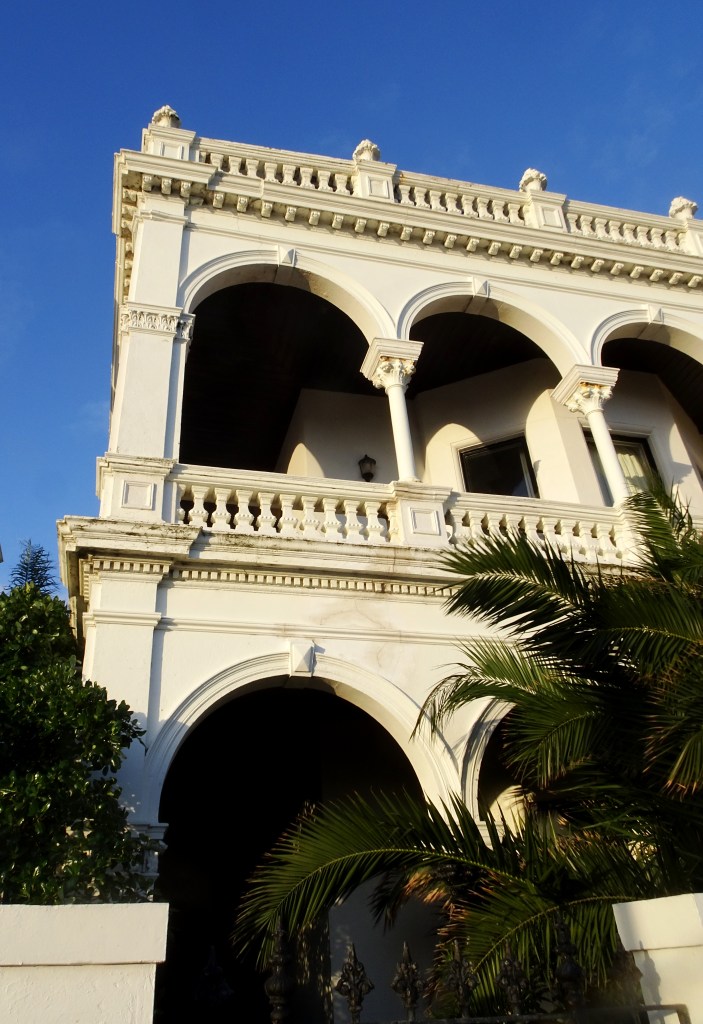
Only yesterday I realised that she was 57 when I was born; the age I am now. Similarly, I now lodge downstairs at the pleasure of those ‘upstairs’. The owners of this hefty bayside mansion will soon begin renovating, thus disgorging their renters to places other. Like Dorothy, I live at the manor house on time borrowed.
This too shall pass.
Since I did not truly know her, (seeing her simply as the cute and kindly granny who always seemed to have a ready store of buttery treats), I can only speculate about how such impermanence made her feel. My guess is insecure. Fatalistic. A typical working class response to the reality of being looked down on. Being disposable. Yet, somewhere, deep in the complex undercurrents of genes and memory, a clear sense that she embraced it. As I do. As an escape. A relief.
Something about the idea of permanence is utterly terrifying.
Risk is liberty.
Certainty is servitude.
In a way, this is Dorothy and I’s shared subversion. Viewed through the prism of ‘positive’ thinking and go-getter rah-rah, it can seem passive. Meek. But flip it and it becomes a revolutionary gesture. A way to overthrow the tyranny of things, and to shrug off the yoke of tick-box life goals. Maybe the pre-approved mortgage of standard issue stability comes with an interest bill too burdensome for its own good. Because, when you practise the discipline of ‘going without’ you soon kick the habit of ‘must have’, which in turns sets you free.
The revolution, it turns out, is one of desire.
As I settle into this quaintly Anglophile room, with its air of old world order and cosy simplicity, and I look out the window into a dirty cream well of walls, I imagine Granny handing a baton across the generational expanse. Yes, it could be fantasy. Me taking refuge in self-justifying revisionism. Curiously though, it feels like a beautiful slow rhythm playing out. A circle closing. Instantly re-opening. Another orbit starting now. Around a sun we will never fix in place.
Instead, we find ways to enjoy its warmth. Thank you, Gran.


Leave a Reply