
How to give up on the romantic ideal without becoming bitter
Words & images © Paul Ransom
Romance is not so much dead as in an induced coma. The idealised other has long since been defrocked. No longer the one, more like one of the many. Imperfect. Ordinary. Too much like the sagging doppelganger in the mirror for pop song euphoria and happy-ever-after sunset bliss. And anyway, what do we really mean when we say I love you?
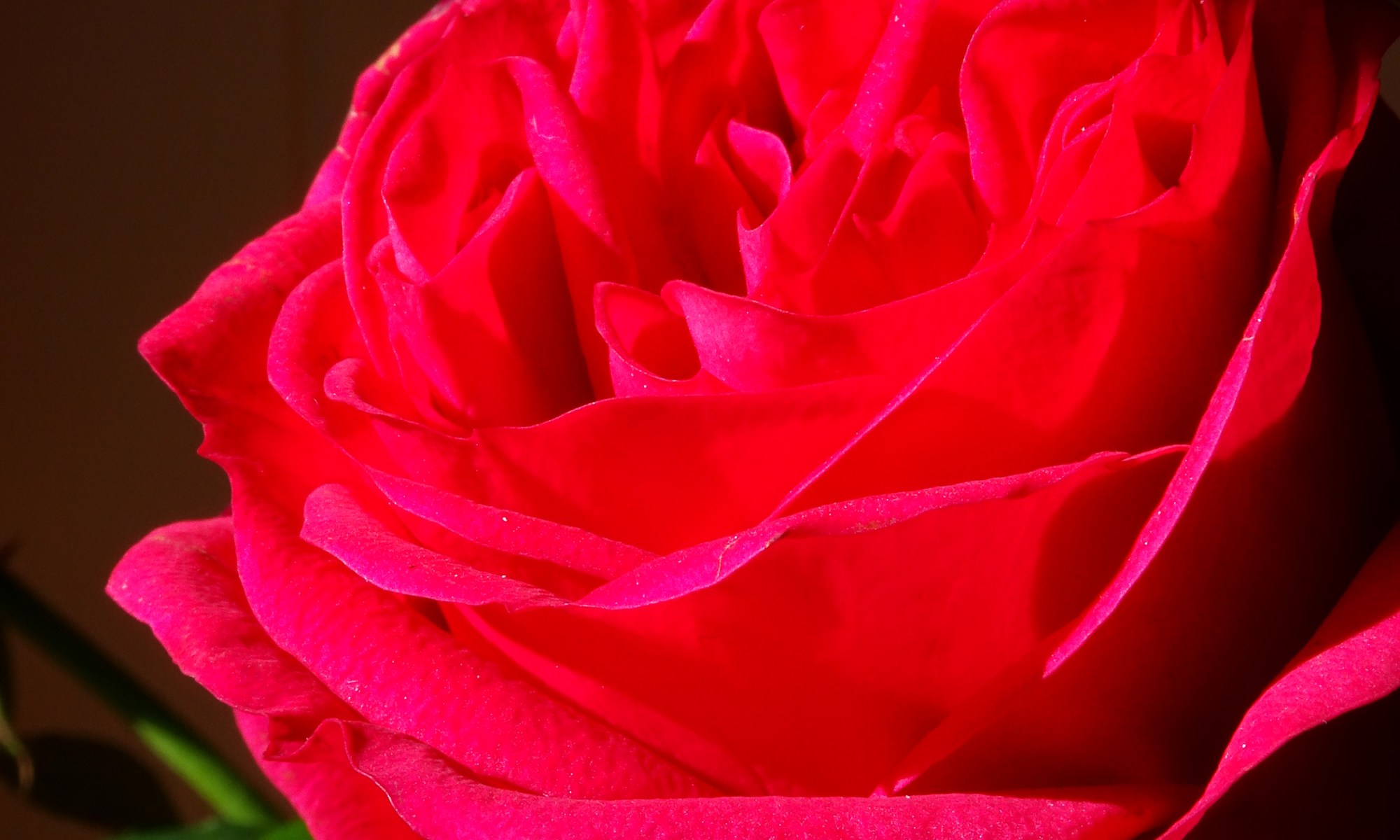
Meanwhile, here in singledom, the mismatch between dream and disappointment is never more glaring than in the syrupy shadow of Valentine’s Day. Indeed, the classic red rose routine of dinner for two and corny couplets in store-bought cards is generally sufficient to elicit exaggerated eyerolls from jaded Juliets and retired Romeos alike.
That said, I am not here to trot out the equally cliched ‘over it’ drone of the terminally shelved. In fact, the impetus for this piece came not from an overdose of V Day cheese but from two weirdly parallel conversations I had last month. One, with a late 30s female friend, the other with a mid-50s male contemporary. She seemed on the brink of resignation. He appeared exhausted by decades of false dawns. To each I duly confessed that although I have not totally given up on the possibility of romantic partnership, I have accepted that the probability is as close to zero as makes no difference.
The door is open, goes the official line. But I am not scanning the horizon.
In other words, realism reigns, with romance relegated to the realm of lottery odds. Not because ‘women done me bad’ – nor any other victim fantasy – but because the evidence overwhelmingly suggests that once the upfront sex-chemical surge wanes after 6-9 months, and the various novelties wear thin, we are left with each other. Whereas this can be the beginning of a deeper and more sustainable intimacy, the not-so-rosy truth of long tern relationships is that they are frequently just that, long, and that many of us simply endure them. For the kids, the security, the fear of what might happen if we dare to leave. And so it goes.
I think here of my younger friend, and of the exasperation in her voice, with its underlying sense of profound disappointment. How did things go so far south? Why does he seem to put me last? What mad kind of hope led me here?
As she approaches 40, and the inevitable deadline that women confront, she finds herself in a pickle. Smart (and experienced) enough to know that partnering up tends to end in breaking up, she finds herself pondering the next round of potential dating with fatalistic fatigue.
“You can do all that careful getting to know you stuff, but it still seems to be a matter of potluck.”
I tried to be reassuring, yet I had to admit that I was the wrong person to ask. “Because I am the guy who’s given up,” I confessed. “Everything you’ve said tonight is why I don’t bother anymore, and almost certainly never will again.”
Fast forward a week and, without preamble, another friend wanted to know whether I was “definitely giving up on women.” As someone who has done the hard yards of marriage, spun the wheel of online dating, and tried numerous variations on the theme of love, sex and heartbreak, he now seems ready to delete the apps and join me on the sidelines.
We talked it over at length, the consensus being not absolute opposition, but rather, slim probability. At our age – both approaching 60 – romantic love seems highly unlikely. We know that neither of us is a ‘great catch’ and we are both ready to admit that the field of (realistically) potential partners is not exactly inspiring. No disrespect, but just as our pot bellies, double chins, and bald patches do not scream dream lover – and our considerable baggage could easily be read as bitterness – much the same can be said for our female counterparts. Age may come with considerable benefits. Sexy is not one of them.
Before you bristle into pious outrage or feel moved to point out the obvious, yes, I do know that sexy is not compulsory and that romance is not the only coupling option. There are many ways for us to love one another, most of which don’t involve updating relationship statuses or exchanging fluids. In addition, as we age, the fiery amours of youth trend toward more viable warm companionship models. However, cosy evenings on the couch watching Dr Martin re-runs don’t often get the heart racing. For all the joys of friendship based partnering, it is not a fire. Not a world-altering rapture. Not a Valentine.
Here perhaps we confront the brute mechanics of human pair bonding. When you have said ‘I love you’ as often as I have, you know that its meaning is vague and slippery. You realise that you can mean it passionately today, only to wake up less convinced tomorrow. You also know that love is far from a guarantee of reasonable treatment. “I only do it cos I love you,” says the perpetrator. Just like they did last time.
Undressed, romantic love is a beautiful chimera. Naked, it is nature’s way of impelling us to have sex, make babies, and hang around long enough to see our babies make babies. (After that, we are cordially invited to die at our earliest possible convenience.)
This may sound heartless – a cynical and reductive materialism designed to dull the cutting edge of bitterness. Clearly, this can be a corrosive view. Yet, I have found that a clear eyed embrace of evolutionary grammar helps me to appreciate the poetry of love without the smear of denial and false promise. That almost all of us participate in the romantic drama at some point in our lives, and that every culture extols and elevates it in art and song, tells us all we need to know about the lustre of this most resilient and Quixotic delusion. Friend zones just don’t cut it, no matter how intimate and rewarding they are.
In crazy love, every sense is heightened. Crashed together in molten union, we feel more alive. If such fires were beyond our capacity, if we could never believe so ardently, where would we be? Possibly extinct. Either that or sitting on the settee consuming yet more gentle dramedy.
As another of my post-romance comrades recently suggested, to fall in love is an act of faith. Hope in the form of another. Therefore, the loss of such belief is akin to the loss of innocence.
Wisdom has many upsides, but it can come at the cost of sadness.
I will confess to a tender melancholy. To a wariness born of bruises, mostly self-inflicted. Furthermore, I am aware that this piece is a rationalised distillation of a basic fear. I have not even come close to being in love since early 2016, principally because I have a penchant for heartbreak that I do not wish to revisit. I am done with the headlong dive and its crippling impacts.
These days there is a pause button, with a risk/reward calculation in play. It makes two things clear.
- The joy of falling is not worth the multiple fractures of landing
- Although the dream is beguiling, the delusion can be toxic
All this despite the fact that I still maintain a love letter blog, swoon at heartfelt love songs, and shed buckets watching romantic K-Dramas.
Though my erstwhile innocence has been pragmatically yielded, I remain besotted by the ideal. By the sheer beauty of it. By its humbling power. From the unromantic vantage of the unattached, I now give thanks for every wound inflicted by the wonderful women I have so foolishly adored. (Or rather, for the self-harm I visited upon myself as a result.) If I have inherited the oxidised patina of old man caution, I have at least done so in the pursuit of priceless wonder.
Like the two friends who inspired this piece, I have embraced the madness and paid the price; and even if I feel unable to bear it again, I will not ask for a refund. I like these wounds. This texture. And I love that I’m (very nearly) over it. Things are easier now that I don’t care to impress you.
Therefore, when St Valentine turns up looking for a dinner date, I won’t be hungry. In fact, I will gladly cede my candlelit table to another couple. Let them be in love. Let them believe that no one ever felt like they do. Damn it, I’ll even foot the bill if they promise to give reality a run for its money.
I may no longer be one for the loving, but I cheer on those who are. For we are both blessed and damned to hope for wildly implausible things; and since God turned out to be a psychopath, and the truth a fake grail, we are left with love. Beautiful, fallible, elusive…just like the women I was lucky enough to fall for.
Footnote: Dissecting the body of love.
In the last few months, I have had the pleasure of reading two excellent books on the topic. Firstly, Alain de Botton’s surgically precise novel Essays In Love. Every Valentine’s Day card should come with a copy. However, if you prefer a less cerebral, yet searingly self-aware take on the subject, I highly recommend Dolly Alderton’s Everything I Know About Love.
PS: I, on the other hand, know nothing.
 As If You Were Listening
You have probably already answered this question, but I thought I might just check. If your brain was transplanted into the body of a handsome young man of 23, and you suddenly had a lot of money for no good reason, would you then be keen to start a love affair with someone? Take into account the current dating scene, and the fact that you would still have your memories, and with them an aversion to having your heart broken.
LikeLike
A –
I will interpret this question as meaning: if I were to be granted a renewed ‘capacity’ – in other words, I had the attractiveness, sex drive and financial reserves to make another pitch at dating – would I re-enter the fray, even with my current memories intact?
Of course, I cannot definitively know this but I suspect not. Or perhaps I simply hope not.
Then again, if one were to be granted the range of choice that one had as a younger, more viable romantic partner – as opposed to the largely unappealing and severely limited range available to a crusty, worn out old sod like me – I suspect I would be tempted. Beauty is harder to resist than old bones.
The point here, Arthur, is that it is easier for us to abstain when the chances of participation are close to zero and the realistically available opportunities are not exactly inspiring.
That said, with the memory of past torments to serve as fair warning, even the miraculously restored me would surely hesitate. If not, I’d be barking in his ear.
PS: Gosh, doesn’t that sound jaded? What a dreary old bastard you are, Paul. 🙂
LikeLike